



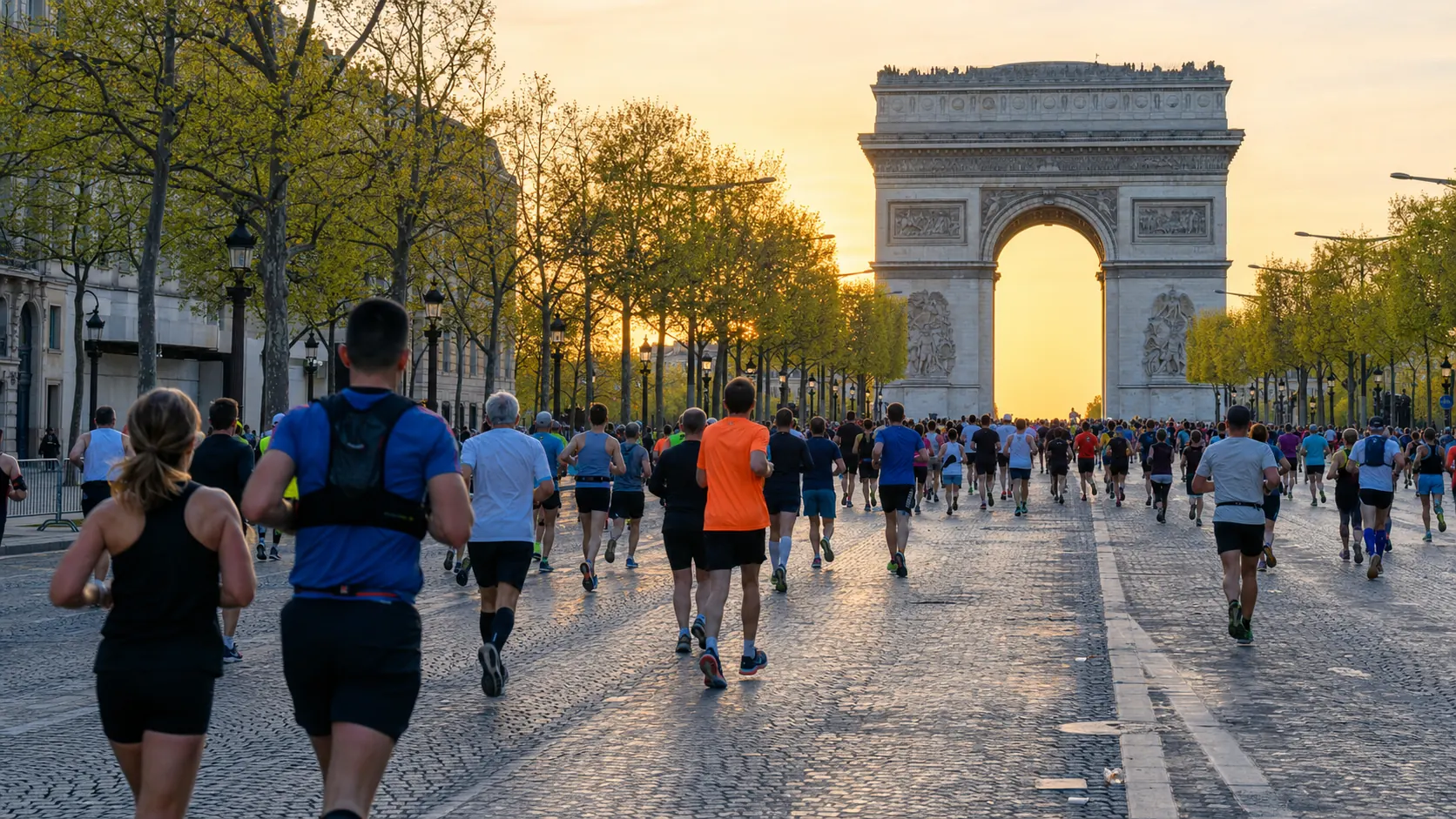

One of Europe’s most iconic destination marathons, taking runners past Paris landmarks on a grand, highly international city course.
Course Highlights
The race’s signature setting includes the Champs-Élysées, the Arc de Triomphe, the Seine, and historic boulevards. The course is designed as a landmark tour as much as a long-distance test, with dense crowd support and a major finish-area production.
Why Runners Love It
Paris combines the scale of a global marathon with an unusually concentrated sightseeing footprint. Runners can turn race weekend into a cultural trip, but the course’s cobblestone-adjacent sections, turns, and crowds reward disciplined pacing.
Race Details
Location: Paris, , France. Distances: Marathon, 10K. Next race date: TBD; placeholder date used for publishing. Typical start: 08:00 local time.
Race-Weekend Tips
Because the official site has not published a future date in the available material, confirm the next edition before booking. Once open, reserve lodging near a Metro line, collect the bib early, and keep the final 48 hours low-mileage.
History & Charity
The official website identifies the Schneider Electric Marathon de Paris but does not state a 2027 date in the available page content. This entry is therefore published with a placeholder date and marked awaiting race date update.
Visit the official race website for registration and final race-week details.
Planning Your Visit
Schneider Electric Marathon de Paris works especially well as a destination weekend because the race experience begins before the start line. Use the official website to confirm registration, packet pickup, course maps, cutoffs, transport, and any changes announced close to race day. International runners should check passport, entry, local transit, and weather needs early. A short shakeout run is useful, but keep the day before focused on rest, familiar food, and a simple logistics plan.
Race-Morning Strategy
Arrive with enough time to use the facilities, find your corral, and settle into the start area without rushing. The most reliable approach is to begin slightly easier than goal pace, especially when the field is crowded or the course includes bridges, hills, heat, wind, or extended waterfront exposure. Drink at stations before you feel thirsty, fuel with products practiced in training, and use the crowd energy without letting it pull you into an unsustainable opening pace. Exact start waves and aid-station offerings can change, so the official runner guide should be treated as the final authority.
After the Finish
Plan a meeting point outside the busiest finish chute and allow time for recovery before sightseeing. A gentle walk, fluids, a real meal, and dry clothes make the rest of the day much more enjoyable. These races reward runners who treat the weekend as a complete experience: learn a little of the host city, support local businesses, and leave room to appreciate the scenery that makes the event memorable. Always recheck the organizer’s final instructions because permits, weather, start times, and routes can change.