



- This event has passed.
Chevron City to Surf for genU
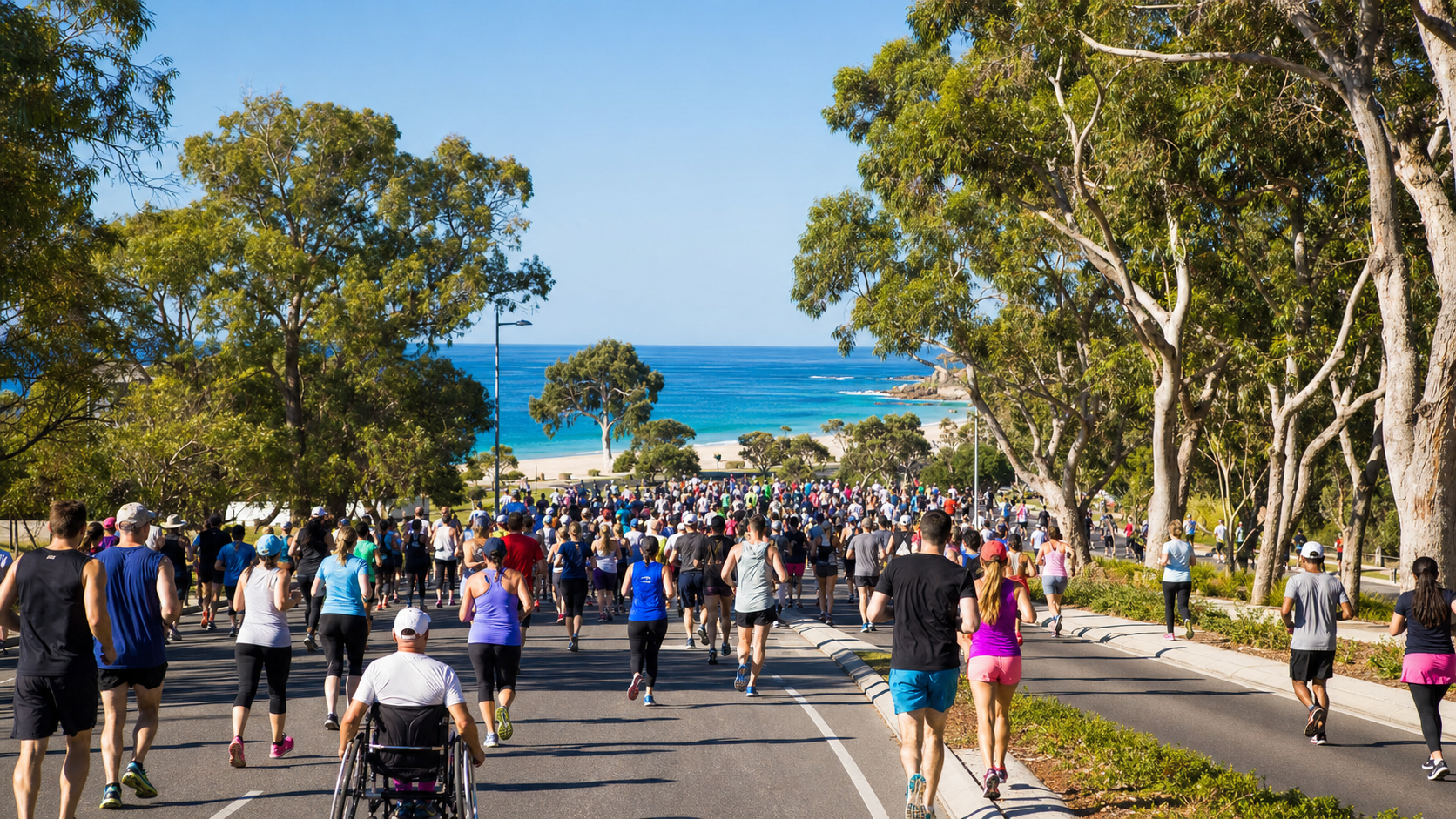
Western Australia’s iconic community fun run sends a huge field toward the Indian Ocean while raising funds for people living with disability.
Course Highlights
The official site calls it WA’s most iconic fun run and community event. The Perth course heads west toward the beach, making the finish and the ocean setting the defining visual reward; the program is designed for many ages and abilities.
Why Runners Love It
Established in 1975, the event is also genU’s premier fundraising event. Its combination of longevity, accessibility, and a shared city-to-coast journey gives it a welcoming character beyond competitive racing.
Race Details
Location: Perth, Western Australia, Australia. Distances: 12K, 4K, 2K, family and accessible events. Next race date: 2026-08-30. Typical start: 08:00 local time.
Race-Weekend Tips
Arrive early because CBD transport and road closures affect the entire route. Bring sun protection, plan a post-finish meeting point near the beach, and choose the distance that fits your group rather than racing the 12K by default.
History & Charity
The organizer says the event was established in 1975 and that funds raised go directly to supporting thousands of people living with disability. The 2026 Perth event is listed for August 30.
Visit the official race website for registration and final race-week details.
Planning Your Visit
Chevron City to Surf for genU works especially well as a destination weekend because the race experience begins before the start line. Use the official website to confirm registration, packet pickup, course maps, cutoffs, transport, and any changes announced close to race day. International runners should check passport, entry, local transit, and weather needs early. A short shakeout run is useful, but keep the day before focused on rest, familiar food, and a simple logistics plan.
Race-Morning Strategy
Arrive with enough time to use the facilities, find your corral, and settle into the start area without rushing. The most reliable approach is to begin slightly easier than goal pace, especially when the field is crowded or the course includes bridges, hills, heat, wind, or extended waterfront exposure. Drink at stations before you feel thirsty, fuel with products practiced in training, and use the crowd energy without letting it pull you into an unsustainable opening pace. Exact start waves and aid-station offerings can change, so the official runner guide should be treated as the final authority.
After the Finish
Plan a meeting point outside the busiest finish chute and allow time for recovery before sightseeing. A gentle walk, fluids, a real meal, and dry clothes make the rest of the day much more enjoyable. These races reward runners who treat the weekend as a complete experience: learn a little of the host city, support local businesses, and leave room to appreciate the scenery that makes the event memorable. Always recheck the organizer’s final instructions because permits, weather, start times, and routes can change.