

How to Choose Your First Marathon: A Guide to Picking the Right Race for You
Choosing your first marathon is one of the most exciting — and slightly overwhelming — decisions a runner can make. With hundreds of marathons happening across the United States every year, the options can seem limitless: big city spectacles, quiet scenic routes, fast flat courses, point-to-point adventures, early fall starts, late November finishes. How do you choose your first marathon wisely? The answer comes down to a handful of key criteria that, when evaluated honestly against your goals and circumstances, make the right race obvious. This guide walks you through every factor worth considering, then highlights eleven excellent first-timer marathons — with detailed profiles of each — so you can make your decision with confidence.
What to Consider When Choosing Your First Marathon
Before you fall in love with a specific race’s Instagram photos, take a step back and think through these six selection criteria. They’ll protect you from choosing a race that’s exciting on paper but wrong for your specific situation.
Course Profile: Flat and Fast vs. Scenic and Hilly
For a first marathon, a flat course is almost always the right choice. Hilly courses are beautiful and character-building, but when you’re running your first 26.2 miles, you want to direct your mental energy toward the experience of the distance itself — not toward managing the physical challenge of hills in the final miles. Flat, certified courses also give you the most accurate data for future training: you’ll learn your true marathon pace on a level playing field, which is invaluable for setting goals for race number two.
Look for courses described as “net flat,” “certified fast,” or “point-to-point with minimal elevation gain.” Avoid courses with significant climbs in miles 18–24 for your first attempt — those miles are hard enough on a flat surface.
Weather: The Variable You Can’t Control But Can Plan Around
Temperature has an enormous effect on marathon performance. Research from the running physiology literature consistently shows that every 5°F above 60°F slows finishing times by several minutes. For a first-timer, ideal race-day weather means temperatures between 40°F and 58°F at the start, with low humidity and light or no wind.
This generally points toward fall races (September through November in most of the US) or early spring races (March through April) in temperate climates. Avoid races that historically start in full summer heat unless they have very early morning start times or significant altitude that moderates temperatures. Check historical weather data for your target race city and time of year — sites like Weather Underground have decades of historical records.
Crowd Support: Fuel for the Final Miles
Crowd support matters enormously in a marathon, especially in the final 10 kilometers when the legs are failing and the mind needs external fuel. Large city marathons — New York, Chicago, Boston — are famous for having spectators lining the course for virtually all 26.2 miles, creating a wall of energy that carries runners through moments they couldn’t sustain alone. Smaller races may have enthusiastic volunteer support but quiet sections through parks or industrial areas.
For first-timers who thrive on external motivation, a race with strong spectator support can be transformational. For more introverted runners who prefer solitude, a smaller race through scenic countryside might actually be more enjoyable. Be honest with yourself about which environment will serve you better on the day.
Logistics: Registration, Travel, and Race-Day Practicalities
Logistics deserve serious consideration, especially for a first marathon. Key questions to ask:
- Is the race local, or does it require travel? Hotel costs, flights, and time away from family or work all factor in. A local race eliminates travel stress and lets you sleep in your own bed — a significant advantage for race-day comfort.
- How easy is packet pickup? Large expos require attending the day or two before the race, which means arriving early. Smaller races may offer race-morning pickup.
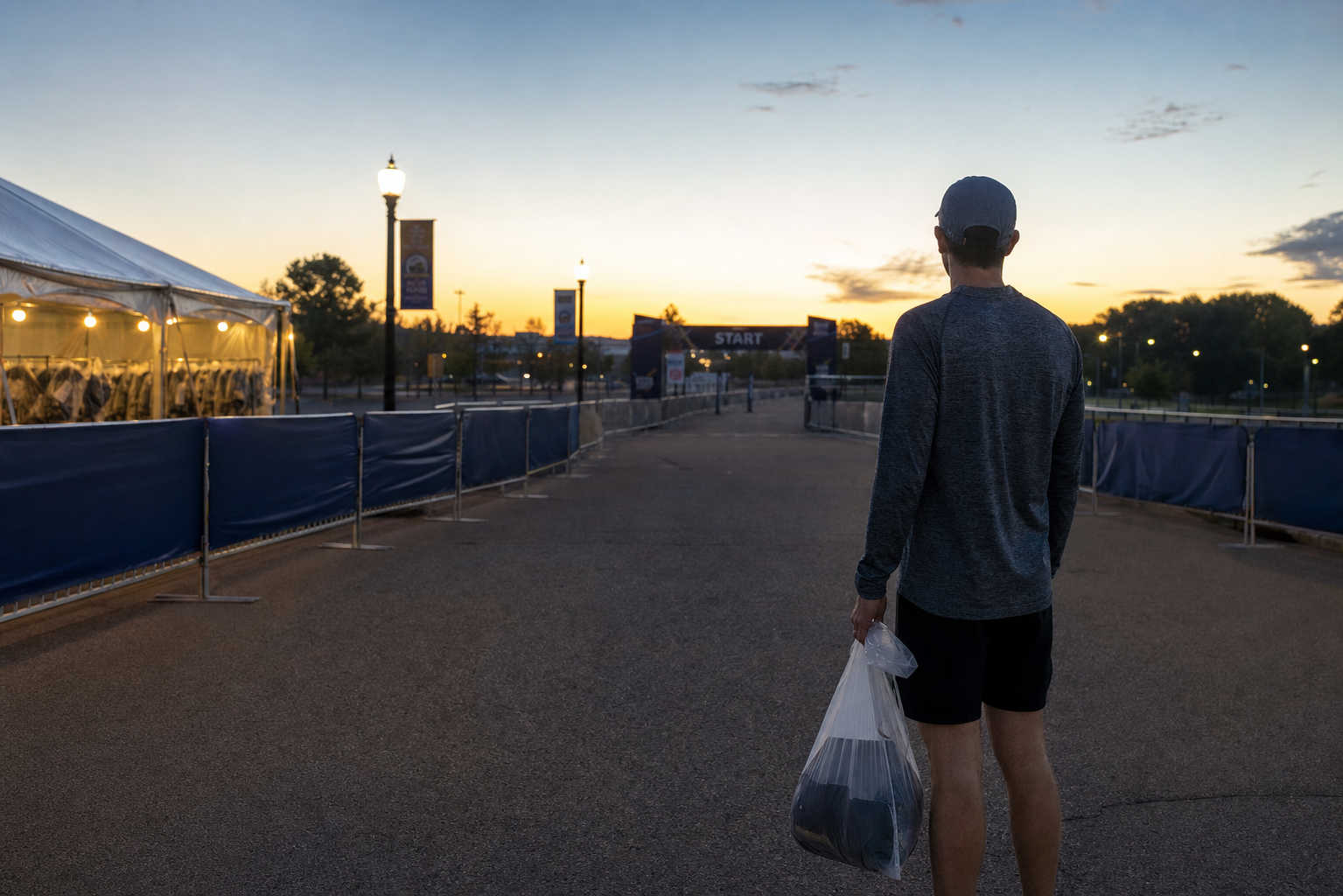
- How accessible is the start line? Point-to-point races require shuttle buses to the start, which means an early wake-up call and sometimes a cold wait at the starting area. Loop courses that start and finish in the same place are logistically simpler.
- What are the bag-check and post-race amenities like? After running 26.2 miles, being able to quickly access dry clothes, food, and a warm place to sit is not a luxury — it’s a necessity.
Registration Cost and Availability
Marathon registration fees vary enormously. The world’s major marathons (Chicago, NYC, Boston) can cost $250–$350 or more plus charity commitments, and entry is by lottery. Regional and smaller marathons may cost $80–$150 with guaranteed entry. For a first marathon, the lottery uncertainty of a major event can add unnecessary stress to your planning — you may not know if you’ve gotten in until months into your training cycle.
Consider starting with a race that offers guaranteed entry through a straightforward registration process. Once you know you love the marathon distance, pursuing the big majors through lottery or charity entry makes complete sense. But your first time around, guaranteed certainty that you have a race to train for is psychologically invaluable.
Training Timeline: Does the Race Date Match Your Readiness?
A standard first-marathon training plan runs 16–20 weeks. Count backward from your target race date — do you have enough time to complete a full plan without compressing it? Running a marathon undertrained is not just a performance risk; it’s a health and enjoyment risk. The race will be far harder than it needs to be, and you may sustain an injury that poisons your memory of the experience.
Ideally, you should be able to run 30–40 miles per week comfortably for several months before beginning a marathon-specific plan. If you’re starting from a lower base, choose a race 6–9 months out rather than 4 months out, and use the extra time to build your running foundation before beginning structured marathon training.
Recommended First-Timer Marathons
The following eleven marathons consistently rank as excellent choices for first-time marathon runners, based on course profile, weather reliability, crowd support, logistics, and overall beginner-friendliness.
NYC Marathon — New York City, New York | November
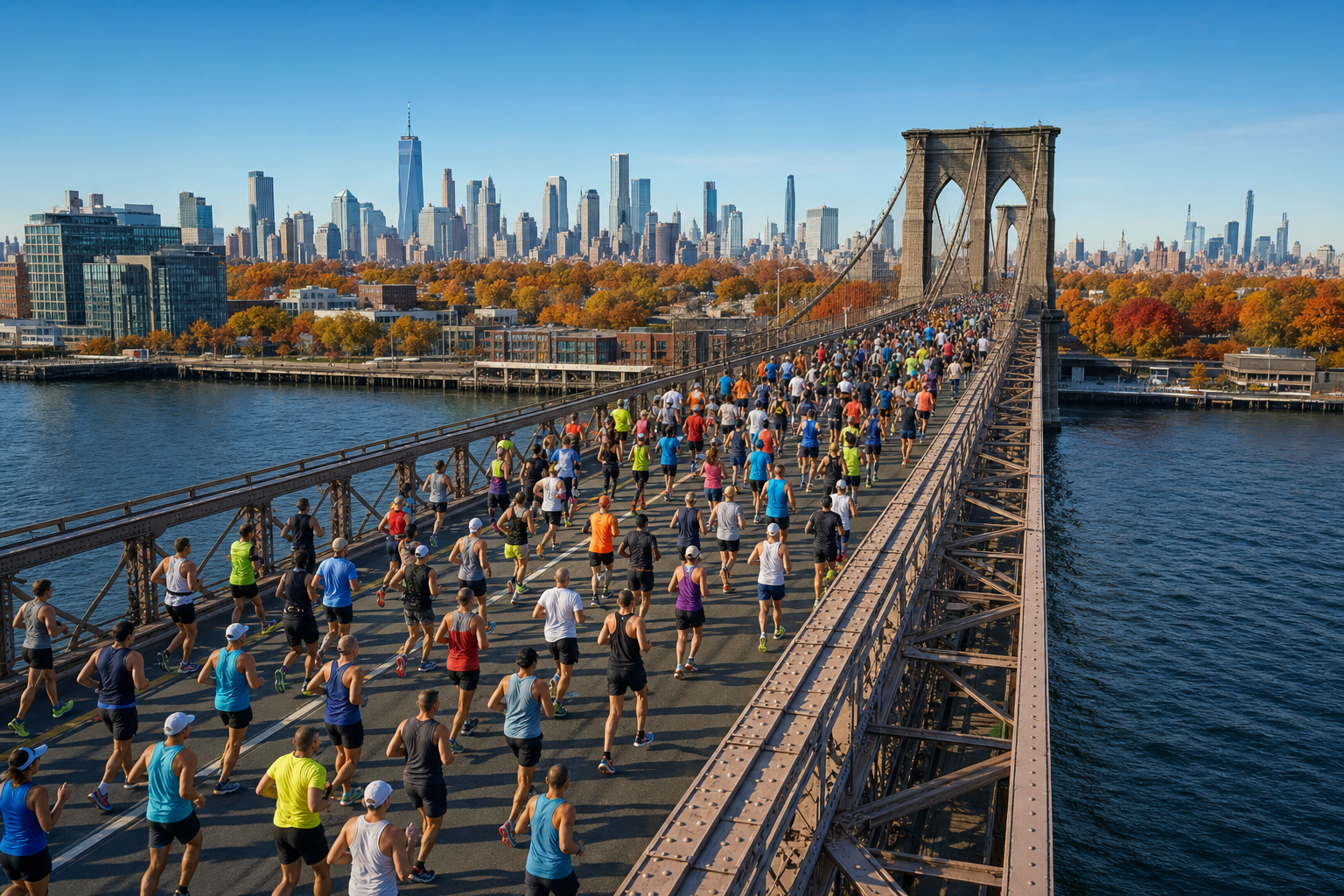
The TCS New York City Marathon is the world’s largest and arguably the most emotionally powerful marathon experience on earth. Running through all five boroughs with over a million spectators lining the course, first-timers often describe it as the most profound day of their running lives. The crowd support is so extraordinary that it genuinely carries you through the hard miles in a way that smaller races simply cannot replicate. The course is moderately challenging — the bridges and the Central Park hills in the final miles are real — but the energy more than compensates. Entry is by lottery, so apply early and consider a charity entry to guarantee your spot. NYRR – NYC Marathon official site.
Chicago Marathon — Chicago, Illinois | October
The Bank of America Chicago Marathon offers one of the flattest and fastest courses of any World Marathon Major — which makes it not only a great first-marathon experience but also a strong platform for future PR attempts. The course weaves through 29 neighborhoods with relentless crowd support throughout, and Chicago’s iconic skyline is a stunning backdrop. October temperatures are typically ideal for marathon racing. Entry is by lottery. For first-timers who want both the bucket-list major-marathon experience and a legitimate shot at a strong first-marathon time, Chicago is an outstanding choice. Chicago Marathon official site.
Marine Corps Marathon — Washington, D.C. | October
Known as “The People’s Marathon,” the Marine Corps Marathon is organized entirely by the US Marines and passes some of the most iconic landmarks in American history. Running past the Lincoln Memorial, the Jefferson Memorial, and the Pentagon before finishing at the Iwo Jima Memorial creates an emotional and patriotic experience unlike any other race. There is no prize money — this race is purely for the love of running. The course has some rolling terrain, and October D.C. weather is typically mild. Entry is by lottery, and the experience is consistently rated among the best in American marathon racing for runners of all abilities. Marine Corps Marathon official site.
Indianapolis Monumental Marathon — Indianapolis, Indiana | November
The Indianapolis Monumental Marathon is a perennial top-rated first-marathon choice for runners who want a flat, fast, well-organized race without the lottery uncertainty or mega-event chaos of the world majors. The course winds through downtown Indianapolis past the city’s impressive array of monuments and along the Central Canal, with consistent crowd support and excellent race organization throughout. Registration is open and typically not lottery-based, making it a reliable and stress-free choice for planning your training cycle. November temperatures in Indianapolis are typically perfect for marathon racing. Indianapolis Monumental Marathon official site.
Grandma’s Marathon — Duluth, Minnesota | June
Grandma’s Marathon along the Lake Superior shoreline is one of the most celebrated destination marathons in the United States, and it’s an exceptional first-marathon choice. The point-to-point course from Two Harbors to Duluth is stunningly flat, running along the lakeshore with cool breezes moderating the June temperatures. The scenery is breathtaking, the town of Duluth is welcoming and festive, and the race has a warm, community-oriented atmosphere that makes every runner feel celebrated. It’s genuinely fast — many first-timers PR here — and the whole weekend is a wonderful experience. Grandma’s Marathon official site.
Erie Marathon at Presque Isle — Erie, Pennsylvania | September
The Erie Marathon at Presque Isle State Park is one of the best-kept secrets in American marathon racing and a near-perfect first marathon for runners who want a flat, fast, low-stress race in a beautiful setting. The course loops around the spectacular Presque Isle Peninsula on Lake Erie, delivering lake views and cool September breezes throughout. Registration is straightforward, the race is affordable, the logistics are simple, and the natural setting is gorgeous. This is a race where first-timers can focus entirely on the experience of running their first marathon without the distractions of a mega-event. Erie Marathon official site.
Philadelphia Marathon — Philadelphia, Pennsylvania | November
The Philadelphia Marathon is a fantastic first marathon in one of America’s most character-rich cities. The course passes through Fairmount Park, along the Schuylkill River, and through neighborhoods that erupt with Philly energy and enthusiasm. The race has a large, energetic field with strong crowd support, and late November temperatures in Philadelphia — while potentially cold — are generally excellent for marathon performance. The city’s race weekend features both a full marathon and a popular half marathon, making it easy to bring along friends or family who aren’t ready for the full distance. Philadelphia Marathon official site.
Twin Cities Marathon — Minneapolis–St. Paul, Minnesota | October
The Medtronic Twin Cities Marathon is consistently described as one of the most beautiful urban marathons in the country. The point-to-point course from Minneapolis to St. Paul passes through neighborhoods surrounded by October foliage at peak color, along the shores of multiple lakes, and through some of the Twin Cities’ most vibrant districts. The race organization is polished, the crowd support is warm and consistent, and the finish at the State Capitol is genuinely moving. For a first-timer who wants a scenic, well-organized race without the lottery uncertainty of a world major, Twin Cities is a top-tier option. Twin Cities Marathon official site.
Columbus Marathon — Columbus, Ohio | October
The Nationwide Columbus Marathon is a first-timer favorite for good reason: the course is certified flat, the race is exceptionally well organized, and the Columbus running community creates a genuinely welcoming atmosphere for runners of all ability levels. The course passes through the Short North arts district, Ohio State University’s campus, and a variety of Columbus neighborhoods with consistent spectator support. October weather in Columbus is typically ideal. Registration is open — no lottery — and the race is competitively priced, making it one of the most accessible and runner-friendly first marathons in the Midwest. Columbus Marathon official site.
California International Marathon (CIM) — Sacramento, California | December
The California International Marathon from Folsom to Sacramento is one of the premier Boston Qualifying marathons in the country and an outstanding first-marathon choice for West Coast runners. The net-downhill point-to-point course is fast, the December Sacramento weather is typically cool and overcast, and the race has a strong tradition of supporting runners of all abilities. CIM is large enough to have significant crowd support and a festival atmosphere, but small enough to feel personal and manageable. Many runners run their first marathon here and their second — it’s consistently one of the best-value, best-run marathons in America. CIM official site.
Missoula Marathon — Missoula, Montana | July
For first-timers in the Pacific Northwest or Mountain West who want a destination race with stunning scenery and a supportive small-city atmosphere, the Missoula Marathon is an excellent choice. The flat, point-to-point course through the Clark Fork River valley is fast, the July temperatures in Missoula’s mountain valley are cooler than summer races in lower elevations, and the town of Missoula — famous for its outdoor culture and vibrant food and beer scene — is a genuinely wonderful place to spend a race weekend. Missoula Marathon official site.
Final Advice for First-Time Marathoners
Whichever race you choose, a few universal principles will serve you well on your first marathon journey.
- Choose a goal time, then add 15 minutes. First marathons almost never go as fast as training suggests. Building in a time buffer prevents you from going out too fast and having a miserable second half.
- Don’t skip your long runs. The weekly long run is the single most important training session in your marathon preparation. Missing more than two or three in your plan significantly increases your risk of struggling badly in the final miles.
- Practice your race-day nutrition in training. Your stomach at mile 18 is not a place for experiments. Test your gel brand, flavor, and timing strategy in long runs so race day holds no surprises.
- Plan your celebration. Book dinner at a good restaurant, arrange to meet loved ones at the finish, and carve out the next day for rest and reflection. Finishing a marathon deserves to be properly celebrated — you’ve earned it.
- Remember why you’re doing this. On the hard days in training, and in the hard miles of the race itself, returning to your personal “why” — the reason you chose this goal — is the most powerful motivator you have. Write it down. Carry it with you.
The marathon will test you in ways no training run can fully prepare you for. It will also reward you with a sense of accomplishment that very few experiences in life can match. Choose your race, commit to the training, and trust the process. Your first 26.2 is waiting for you.