

How to Train for a Marathon in the Heat: Summer Long-Run Strategies
Training for a fall marathon when summer arrives is one of the great challenges of recreational running. Your easy pace slows by 30–90 seconds per mile, your heart rate climbs even on familiar routes, and the long runs that felt manageable in spring suddenly feel like survival exercises. But summer marathon training isn’t just about suffering through heat — it’s an opportunity to develop genuine physiological adaptations that make you a stronger, more resilient runner come race day. This guide covers everything you need to know about marathon training in heat: the science of what happens to your body, how to adjust your training intelligently, and how to stay safe when temperatures rise.
What Heat Does to Your Body: The Physiology of Running in Hot Weather
When you run in hot conditions, your body faces a conflict between two competing priorities: supplying blood to working muscles to sustain exercise, and routing blood to the skin surface to dissipate heat through sweat. This dual demand is significant — in moderate heat, cardiac output to the skin can increase by 1–2 liters per minute compared to cool conditions, leaving less blood available for your legs. The result is an elevated heart rate at any given pace, reduced running economy, and a faster onset of fatigue.
Sweat is your primary cooling mechanism. You can lose anywhere from 0.5 to 2.5 liters of sweat per hour depending on intensity, temperature, humidity, and individual sweat rate. With that fluid loss comes sodium, potassium, magnesium, and chloride — the electrolytes that govern muscle contraction, nerve signaling, and fluid balance. Lose too much without replacing it, and your performance degrades rapidly. Lose extreme amounts without replacement, and the consequences become dangerous.
Humidity compounds everything. Sweat only cools you when it evaporates from your skin. In high humidity, the air is already saturated with water vapor, reducing evaporation efficiency. A 90°F day at 30% humidity may feel manageable; the same temperature at 85% humidity feels significantly more threatening because your sweat system is working overtime with diminished effect. Always check both temperature and humidity (the “heat index”) before long runs.
Heat Acclimatization: A 10–14 Day Timeline That Changes Everything
Here’s the good news: your body is remarkably good at adapting to heat — but only if you give it the right stimulus and enough time. Heat acclimatization is a well-documented physiological process that unfolds over 10–14 days of consistent exposure to warm conditions during exercise. The adaptations are significant:
- Increased plasma volume: Your blood volume expands (by up to 10–12%), improving cardiovascular efficiency and delivery of oxygen to working muscles. This adaptation is one reason heat-trained runners often see improved cool-weather performance as well.
- Earlier onset of sweating: Your sweat glands begin activating at a lower core temperature, improving cooling efficiency.
- Lower sweat sodium concentration: Your kidneys and sweat glands become more efficient at retaining sodium, reducing electrolyte losses per liter of sweat.
- Reduced heart rate at any given pace: As plasma volume expands and blood becomes easier to pump, your cardiac load at a fixed effort decreases noticeably.
- Reduced core temperature at exercise onset: After acclimatization, your resting core temperature is slightly lower, giving you more thermal buffer before reaching dangerous levels.
Research published in the Journal of Sports Medicine suggests the majority of heat adaptation occurs within the first 7–10 days, with full adaptation complete by day 14. To achieve acclimatization, you must exercise in the heat — passive exposure (sitting in a hot room) produces some adaptation but far less than active training in warm conditions. Begin with shorter, easier runs in warm conditions and build duration and intensity gradually over the two-week acclimatization window.
Adjusting Your Training: Pace, Effort, and Expectations
The cardinal rule of summer marathon training: train by effort and heart rate, not pace. Your 8:30/mile easy pace in 45°F weather may become a 9:15–9:30/mile effort when temperatures rise to 80°F with humidity — and both are aerobically equivalent. Forcing pace targets in heat is physiologically counterproductive and significantly increases injury and illness risk.
Practical training adjustments for hot weather:
- Slow your easy runs by 60–90 seconds per mile compared to your cool-weather equivalent. Let your heart rate guide you: keep easy runs at 65–75% of maximum heart rate.
- Shorten or reschedule speed workouts. High-intensity intervals in extreme heat are risky. If the heat index exceeds 90°F, consider moving your track session to a treadmill, shortening the session, or reducing the intensity to tempo rather than interval pace.
- Prioritize long-run completion over long-run pace. A 20-mile long run finished at a slow, sweaty pace builds the same aerobic infrastructure as one run in cool conditions. The miles are the point; the pace is a secondary concern in summer.
- Reduce weekly mileage by 10–15% during heat waves. Recognize that your body is working harder at any given pace and that the same training load requires more recovery time in heat.
Hydration Math: How Much to Drink and When
Dehydration impairs performance before you feel thirsty — research suggests performance degradation begins at a body weight loss of just 2% through sweat. For a 150-pound runner, that’s only about 3 pounds of water loss, or roughly 1.5 liters. In summer conditions, you can reach that deficit in under an hour of running.
A practical hydration framework for summer long runs:
- Pre-run hydration: Drink 16–20 ounces of water or a low-calorie electrolyte drink in the 2 hours before your run. Urine color should be pale yellow — not clear (over-hydrated) or dark (dehydrated).
- During the run: Aim to replace approximately 75–80% of sweat losses during the run. A general guideline is 6–8 ounces every 15–20 minutes, though individual sweat rates vary significantly. On runs over 60 minutes, begin drinking earlier rather than waiting for thirst.
- Post-run rehydration: Drink 16–24 ounces for every pound of body weight lost during the run. Weigh yourself before and after a long summer run to calibrate your sweat rate.
- On runs over 90 minutes: Plain water is insufficient — you must replace electrolytes. Sports drinks, electrolyte tablets (Nuun, Precision Hydration), or salty snacks alongside water prevent the dangerous dilution of blood sodium known as hyponatremia.
Electrolyte Strategy: More Than Just Salt
Sodium is the most important electrolyte to replace during summer running — it drives fluid retention and governs the thirst response. But sodium alone isn’t enough. A complete electrolyte strategy for summer marathon training also addresses potassium (muscle contraction), magnesium (muscle relaxation and cramp prevention), and chloride (fluid balance).
Practical electrolyte tactics:
- Add electrolyte tabs or powder (Nuun, Precision Hydration, LMNT) to your water bottle on any run over 60 minutes in summer conditions.
- Eat a salty pre-run meal or snack — sodium consumed before exercise helps your body retain fluid and begins the pre-loading process.
- Consider higher-sodium gels or chews on hot long runs. Standard gels provide 50–100mg of sodium per serving; in heavy sweat conditions, that may not be enough.
- After very long runs in heat, prioritize sodium-containing recovery foods (pretzels, broth, salted rice) alongside fluid replacement.
Timing Your Runs: When to Hit the Road in Summer
The single most effective tool for managing summer training is simple: run at the right time of day. Temperature and solar radiation vary dramatically between the coolest and hottest parts of a summer day.
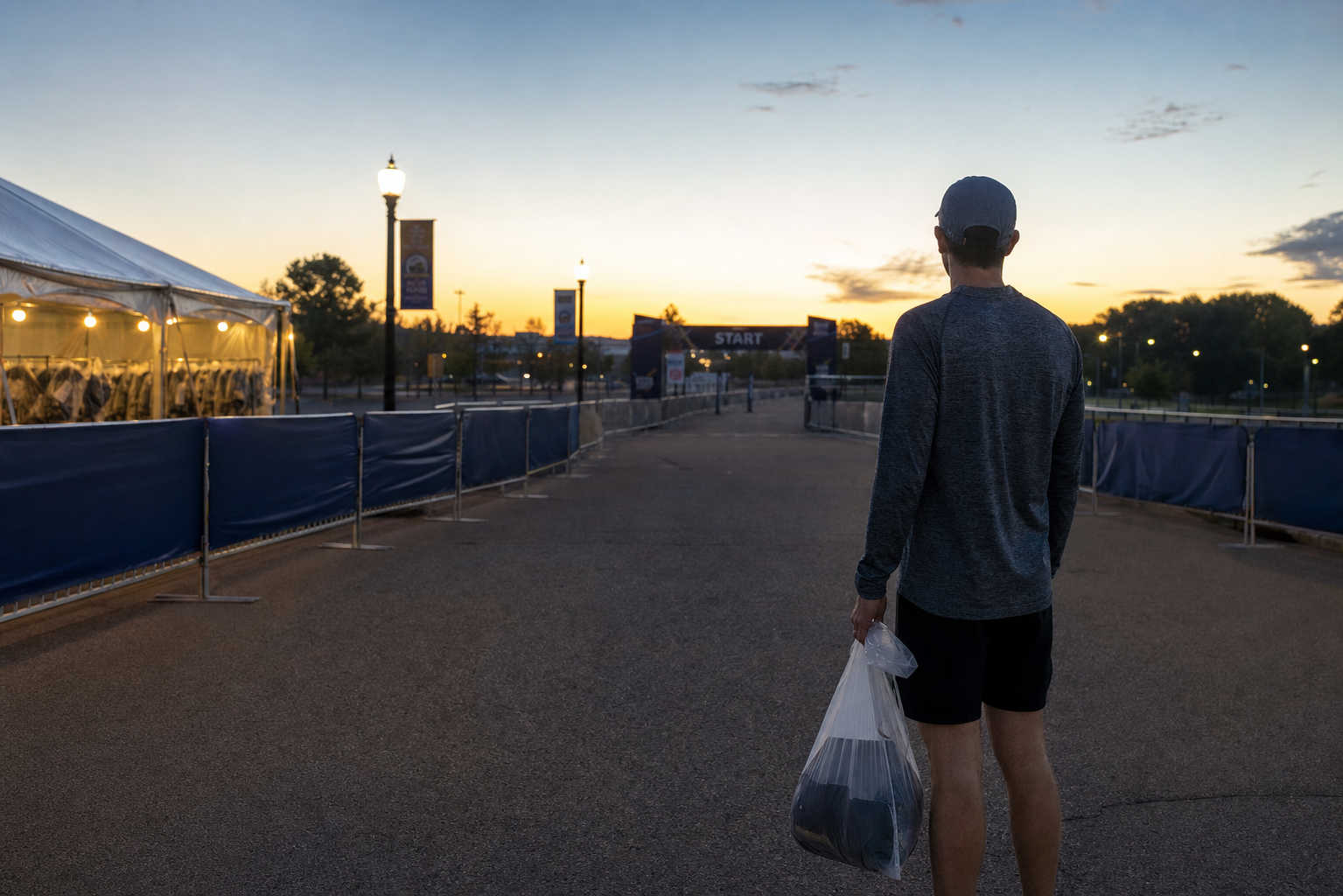
- Early morning (5–7 AM): The optimal window for summer running. Temperatures are at their daily minimum, humidity is often lower than at midday, and solar radiation is absent or minimal. Most elite runners and serious amateurs shift all their quality summer workouts to this window.
- Evening (7–9 PM): A reasonable second option — temperatures have dropped from the daily peak, though residual heat from pavement and buildings can be significant. Humidity may be higher than morning in some climates.
- Avoid midday (10 AM–4 PM): Peak solar radiation and peak temperature combine to create the highest thermal stress of the day. Unless absolutely necessary, avoid running during this window in summer.
If your schedule permits only midday running, find shaded routes, run on trails with tree cover, and significantly reduce both pace and distance compared to your planned workout.
Treadmill Alternatives: When Outside Isn’t an Option
There is no shame in taking a long run indoors when the heat index is dangerously high. A treadmill session in an air-conditioned gym preserves training quality, eliminates heat stress risk, and allows full execution of workouts that would be modified or dangerous outdoors.
Treadmill training tips for summer marathon prep:
- Set the treadmill to 1% grade to better simulate outdoor running resistance.
- Use a fan directed at your body — even in air conditioning — to replicate the cooling effect of running airflow. Studies show that a fan reduces perceived exertion and heart rate at identical speeds and temperatures.
- Keep your regular hydration schedule — treadmill running still produces significant sweat loss, especially in a warm gym.
- For mental endurance on very long treadmill runs, break the effort into sections with different paces or entertainment choices, and consider running in a location with other runners present for motivation.
Cooling Strategies: Before, During, and After Runs
Pre-cooling — actively lowering your core temperature before exercise — is one of the most evidence-backed interventions for improving performance in the heat. Studies cited by the American College of Sports Medicine show that pre-cooling can reduce perceived exertion, lower heart rate, and extend time to fatigue in hot conditions.
Effective cooling techniques:
- Ice bandanas or neck wraps: Filling a bandana or purpose-made cooling neck wrap with ice and wearing it around the neck provides direct cooling to the carotid arteries and is effective for 30–45 minutes per filling. A favorite tactic among elite runners in warm-weather races.
- Ice vest pre-cooling: Wearing an ice-filled vest for 10–15 minutes before a long run or race lowers core temperature measurably. Less practical for daily training, but worth considering for key workouts or warm-weather races.
- Cold water immersion post-run: Sitting in a cold bath or placing your legs in a bucket of ice water for 10–15 minutes after long summer runs accelerates recovery and reduces inflammation.
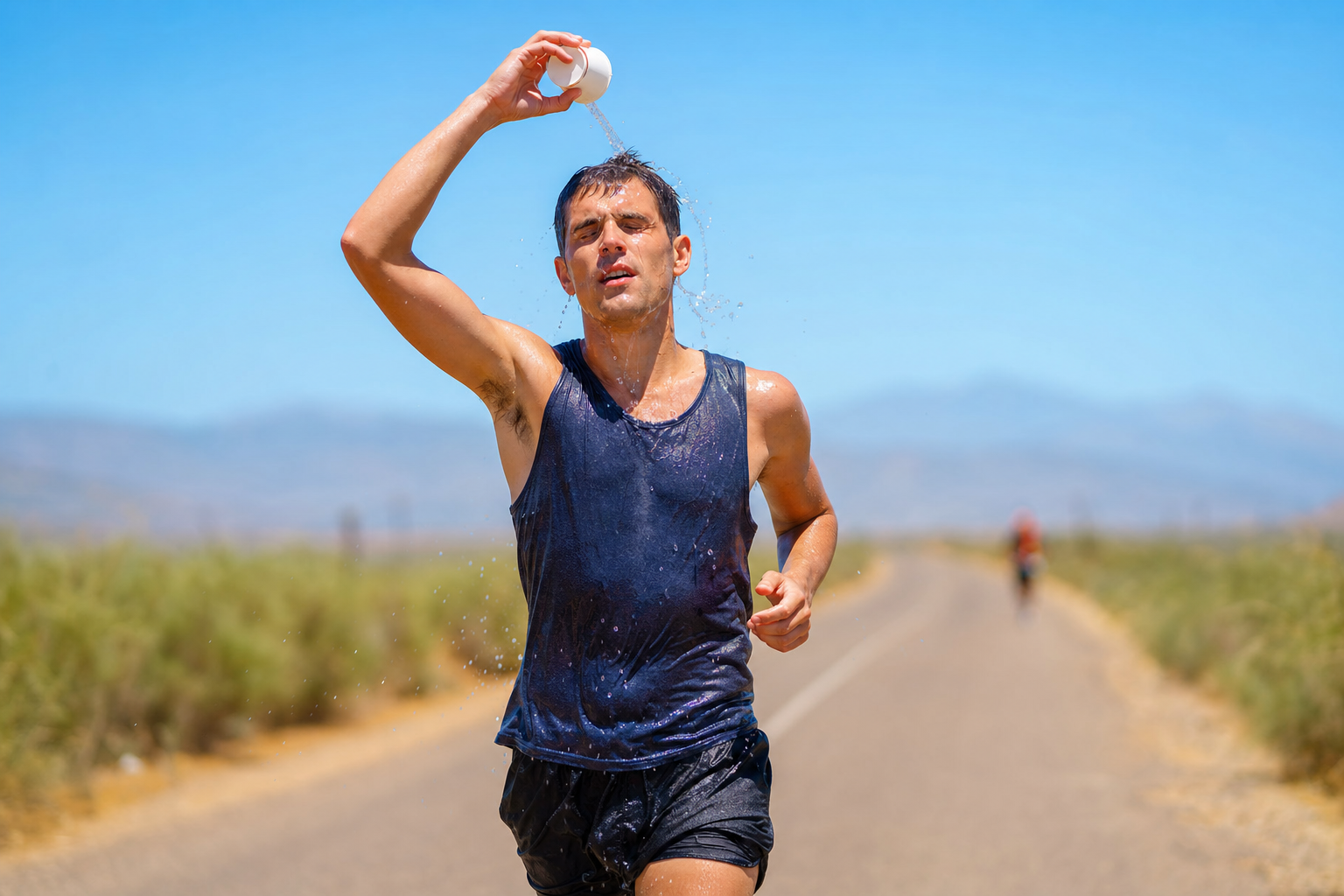
- Wrist cooling: Applying cold water or ice to the pulse points on your wrists provides rapid (if modest) cooling — useful at aid stations mid-run.
- Wet hat or cap: A lightweight running cap soaked in ice water and placed on your head before and during a run helps maintain a cooler head temperature and reduces solar radiation exposure.
Warning Signs of Heat Illness: Know Before You Go
Heat illness exists on a spectrum from mild heat cramps to the potentially fatal heat stroke. Every runner training in summer needs to recognize the signs and know when to stop immediately.
- Heat cramps: Painful muscle spasms, usually in calves or hamstrings, caused by electrolyte imbalance and dehydration. Stop running, move to shade, hydrate with electrolyte-containing fluids, and gently stretch the affected muscle. This is a warning signal — don’t push through it.
- Heat exhaustion: Symptoms include heavy sweating, cold or clammy skin despite heat, fast and weak pulse, nausea, muscle cramps, tiredness, weakness, dizziness, headache, or fainting. Stop running immediately. Move to shade or air conditioning, lie down with legs elevated, apply cool wet cloths, and drink fluids slowly. If symptoms don’t improve within 15 minutes, seek medical attention.
- Heat stroke: A medical emergency. Symptoms include body temperature above 103°F, hot and red skin (either dry or damp), rapid and strong pulse, and possible unconsciousness. Call emergency services (911) immediately. Cool the person as rapidly as possible — immersion in cold water is the fastest effective treatment. Do not give fluids to someone who is confused or unconscious.
Never run alone in extreme heat conditions. Always tell someone your route and expected return time. Carry a phone. Know where shaded, air-conditioned buildings are on your route — grocery stores, libraries, and community centers can be literal lifesavers in an emergency.
Structuring Your Summer Marathon Training Week
A sensible summer training week for a runner targeting a fall marathon might look like this:
- Monday: Rest or very easy 30-minute jog (morning only)
- Tuesday: Moderate effort run (45–60 minutes) in early morning. Adjust pace for heat and humidity.
- Wednesday: Easy recovery run (30–40 minutes) or treadmill if conditions are extreme
- Thursday: Quality workout — tempo or intervals. Do these early morning or on a treadmill in AC. Shorten by 15–20% in high heat.
- Friday: Rest or easy cross-training (swimming is excellent in summer — it provides aerobic benefit without the heat stress of running)
- Saturday: Long run — always in early morning, always with full hydration and electrolyte plan, always with a backup plan to cut short if conditions become dangerous
- Sunday: Easy active recovery run or complete rest
The Silver Lining: How Summer Heat Training Pays Off in Fall
Here is the remarkable truth about summer marathon training: if you do it right, you arrive at your fall race genuinely fitter than if you’d trained in ideal cool conditions all year. The expanded plasma volume from heat acclimatization doesn’t disappear when temperatures drop — it persists for weeks to months after the heat stress is removed. This means runners who complete a full summer of heat-adapted training often notice that their cool-weather pace feels surprisingly fast and their heart rate is lower than expected. The work you put in through the sweltering weeks of July and August is an investment that pays dividends on that crisp October race morning. Stay consistent, stay safe, and the heat will make you stronger.