

What to Eat Before a Race: Pre-Race Nutrition Guide for 5K to Marathon
What you eat before a race can be the difference between a personal best and a miserable DNF. Pre-race nutrition is one of the most overlooked performance variables in running — yet it’s one you have near-total control over. Whether you’re toeing the line at a local 5K or preparing for your first marathon, this guide explains exactly what to eat before a race to fuel your best performance, from the dinner before race day all the way to the final moments in the starting corral.
The Core Principle: Fuel the Engine, Don’t Weigh It Down
The goal of pre-race nutrition is simple: arrive at the starting line with full glycogen stores (your muscles’ primary fuel source), a settled stomach, and enough energy to perform your best — without feeling sluggish, bloated, or distressed. Glycogen is stored carbohydrate. You have enough stored glycogen for roughly 90 minutes of sustained hard running, which is why fueling strategy changes dramatically between shorter races (5K, 10K) and longer ones (half marathon, marathon).
The fundamental rules that apply to every race distance:
- Carbohydrates are your primary fuel. In the days and hours before a race, prioritize easily digestible carbs — pasta, rice, bread, oats, potatoes — to top up glycogen stores.
- Keep fat and fiber low on race day. Fat slows digestion; fiber can cause GI distress mid-race. Race day is not the time for high-fiber cereals, beans, or fatty meats.
- Never try anything new on race day. Test all foods and drinks in training first. Your pre-race routine should be something your gut knows and trusts.
- Timing matters. Eating too close to the start risks GI upset; eating too far in advance leaves you running on empty.
The 3-2-1 Fueling Timeline
Think of pre-race nutrition in three phases: three days out, two hours out, and one hour out. This framework helps you approach race week with a clear, stress-free plan.
3 Days Out: Carbohydrate Loading Begins
For races lasting longer than 90 minutes — half marathons and marathons especially — carbohydrate loading in the three days before your race is genuinely effective. This means increasing the proportion of carbohydrates in your diet to approximately 70–80% of total calories, while reducing fat and protein slightly. You’re not necessarily eating more calories overall, just shifting the balance toward carbs.
Good carb-loading foods:
- White pasta, white rice, or white bread (easier to digest than whole-grain equivalents)
- Baked or mashed potatoes
- Pancakes or waffles with syrup
- Bagels with a light cream cheese or honey
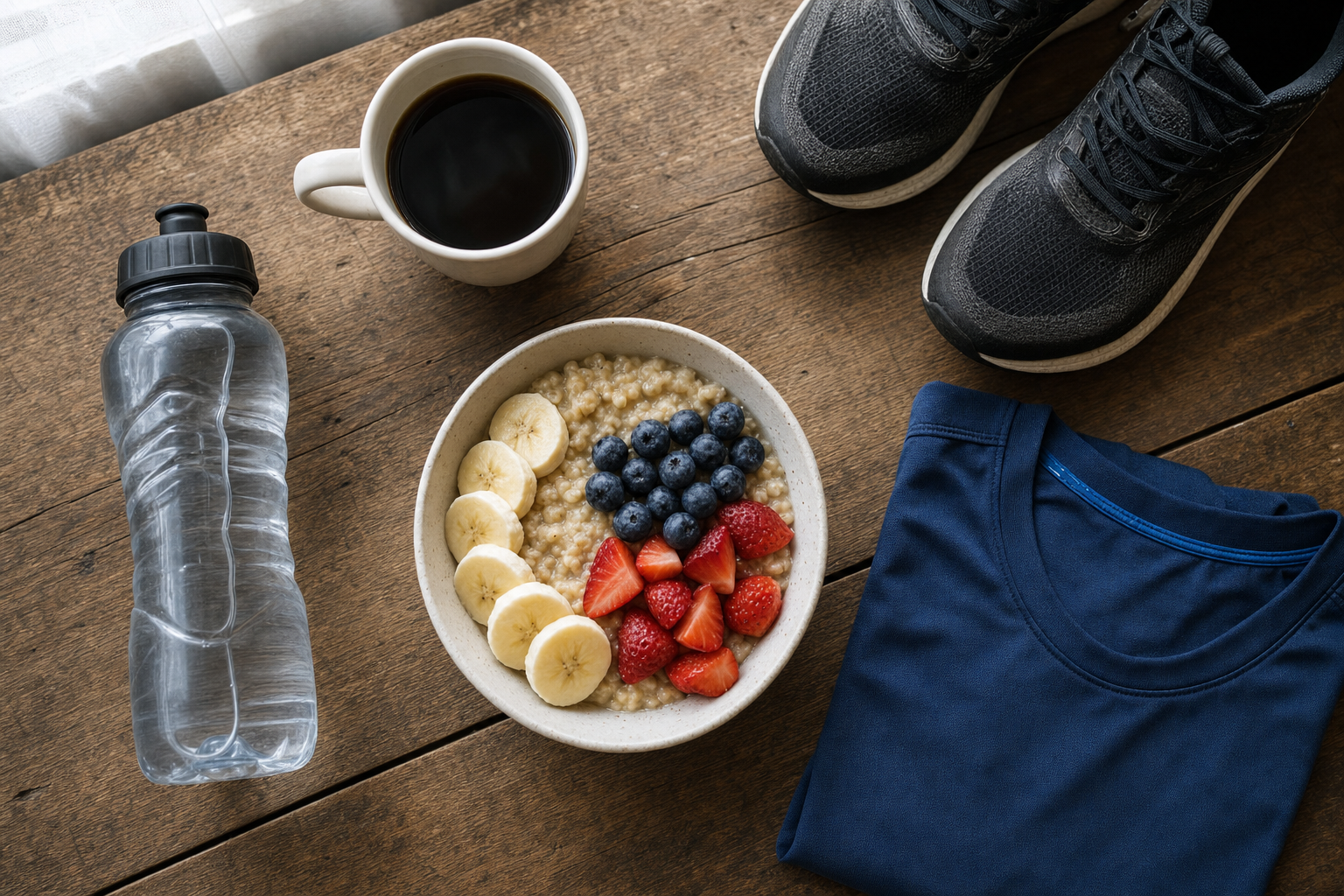
- Oatmeal with banana and honey
- Sports drinks or 100% fruit juice (in moderation)
For 5K and 10K races — which last under 60 minutes for most runners — carb loading is less critical. Simply eat a normal, balanced diet in the days before the race and focus more on what you eat the morning of the event.
2 Days Out: The Pre-Race Dinner
The night-before dinner is legendary in running culture, and for good reason — it’s your last significant opportunity to load up your glycogen stores before race morning. The ideal pre-race dinner is carbohydrate-rich, low in fat and fiber, moderate in protein, and something your stomach knows and loves.
Classic and proven pre-race dinners:
- Pasta with marinara sauce and a bread roll (the timeless choice — there’s a reason it’s a cliché)
- White rice with grilled chicken and steamed vegetables (light on the veggies)
- A large baked potato with a small amount of butter and chicken
- Stir-fried rice with tofu or shrimp and minimal oil
Eat your pre-race dinner at a normal dinner hour — not extremely late. Give your body time to digest before you sleep. Avoid alcohol, spicy food, heavily seasoned sauces, and anything you’ve never eaten before. This is not the night to try a new ethnic restaurant or an adventurous menu item.
1 Hour Out: Race Morning Breakfast
Race morning breakfast is the most important fueling moment of the day. It tops off glycogen stores that have been partially depleted overnight, steadies blood sugar, and gives your body the fuel to run hard. The general rule is to eat 2–4 hours before your start time, and to consume 1–4 grams of carbohydrate per kilogram of body weight.
What that looks like in practice:
- 3–4 hours before start: Larger breakfast — oatmeal with a banana and honey, toast with peanut butter and jam, or a bagel with egg whites and a sports drink.
- 2 hours before start: Moderate breakfast — a banana and a piece of toast with honey, a small bowl of oatmeal, or a sports bar with water.
- 60–90 minutes before start: Small, easily digestible snack — half a banana, a plain rice cake with a thin spread of peanut butter, a few crackers, or a single energy gel with water.
- 15–30 minutes before start: If needed, one energy gel or 4–6 ounces of sports drink to provide a last-minute glucose boost.
Sample Pre-Race Meals by Distance
Different race distances require different nutrition approaches. Here’s a practical guide tailored to the four most common race types:
5K Pre-Race Meal
A 5K typically lasts 15–35 minutes — short enough that glycogen depletion is rarely a limiting factor. Focus on eating something light and familiar that won’t cause GI distress during the fast, hard effort of a 5K. Eat 90 minutes to 2 hours before the race.
- A banana and a slice of plain toast
- A small bowl of oatmeal with honey and half a cup of coffee (if you’re a regular coffee drinker)
- A plain bagel with a thin layer of peanut butter
- A sports bar with 20–30 grams of carbohydrate and water
Avoid a big meal before a 5K — you’ll be running near maximum effort, and a full stomach will not cooperate.
10K Pre-Race Meal
A 10K extends the race duration to roughly 30–70 minutes for most runners. Fueling is still relatively simple — you won’t bonk from glycogen depletion — but race-morning nutrition matters more than for a 5K. Eat 2 hours before the start.
- A bowl of oatmeal with a banana and honey
- Toast or a bagel with peanut butter and jam
- A sports drink (16 ounces) consumed slowly over 60–90 minutes before the race
- Half a peanut butter and banana sandwich on white bread
Half Marathon Pre-Race Meal
At 13.1 miles, a half marathon lasts 1.5 to 3+ hours — firmly into glycogen-depletion territory for many runners, especially in the final miles. Prioritize a solid breakfast 2.5–3 hours before the start, and consider a gel or sports chew 15–20 minutes before the gun.
- Oatmeal with banana, honey, and a cup of coffee or tea
- A bagel with peanut butter and jam, plus a sports drink
- Pancakes or waffles with syrup and a banana
- White rice with a scrambled egg and a drizzle of honey (common among Asian long-distance runners — surprisingly effective)
- 15–20 minutes before start: one energy gel with 8 ounces of water
Marathon Pre-Race Meal
Marathon morning nutrition is critically important. You’ll be running for anywhere from 2.5 to 6+ hours, and proper fueling from the morning meal onward is essential. Eat 3–4 hours before the race start — which often means a 4 a.m. or 5 a.m. alarm for early morning marathons. Then take a gel or sports drink 15–30 minutes before the start.
- Large bowl of oatmeal with banana and honey, plus a bagel with peanut butter, plus coffee or tea
- White rice with honey and a banana (a favorite among elite East African runners)
- A peanut butter and banana bagel plus a large sports drink consumed over 1–2 hours
- If you wake up too close to the start time (under 2 hours), eat something smaller and easier to digest — a banana, rice cake, or half a bagel — rather than skipping food entirely
- 15–20 minutes before start: one or two energy gels with water to trigger liver glycogen release
Foods to Avoid Before a Race
As important as knowing what to eat is knowing what to avoid. The following foods are common culprits for race-day GI distress, sluggishness, or energy crashes:
- High-fiber foods: Whole-grain bread, bran cereals, beans, lentils, and raw cruciferous vegetables (broccoli, cauliflower, cabbage) are nutritionally excellent but can cause gas, bloating, and urgent bathroom needs during a race. Avoid them on race day and the night before.
- High-fat foods: Bacon, sausage, eggs fried in heavy oil, avocado in large quantities, and full-fat dairy slow gastric emptying and can cause nausea during hard running. Keep fat intake very low on race morning.
- Spicy food: Hot sauces, spicy curries, and heavily seasoned dishes are notorious for causing GI issues under race-day exertion. Save the sriracha for post-race celebrations.
- Dairy (in quantity): Some runners tolerate dairy well; others do not — especially under exertion. If you’re lactose-sensitive at all, skip the milk and yogurt on race morning.
- Alcohol: Even one drink the night before a race dehydrates you, disrupts sleep quality, and impairs recovery. The night before a race is not the time for a glass of wine “to calm the nerves.”
- Anything new: Cannot be said enough — never eat something unfamiliar before a race. Even a well-meaning host or hotel restaurant can derail your race with an unfamiliar ingredient or cooking style.
- Excessive caffeine: A cup of coffee is beneficial for most runners (caffeine is a well-researched performance enhancer). Multiple espresso shots, energy drinks, or pre-workout supplements can cause jitteriness, elevated heart rate, and GI upset. Stick to your normal caffeine routine.
Hydration Guidelines: How to Drink for Race Day
Hydration is as important as solid food nutrition — and arguably easier to get wrong. Dehydration impairs performance at losses of even 1–2% of body weight, but over-hydration (hyponatremia from drinking too much plain water) can be dangerous. Here’s how to hydrate intelligently:
Two Days Before the Race
Drink plenty of water and electrolyte-containing fluids (sports drinks, coconut water, or electrolyte tablets in water) throughout the day. Your urine should be pale yellow — not completely clear and not dark amber. Avoid alcohol. Limit coffee to your normal intake.
Race Morning
Drink 16–24 ounces (500–700 ml) of water or sports drink in the 2–3 hours before the race. Then take small sips — 4–8 ounces — as needed up to the start. Don’t chug large amounts right before the gun; it will slosh and may cause cramps.
During the Race
- 5K: You generally don’t need to drink mid-race unless it’s very hot. Take water if offered at an aid station, but a 20-minute race doesn’t require active hydration.
- 10K: Take water or sports drink at aid stations, especially in warm weather. Sip, don’t gulp.
- Half Marathon: Drink 4–6 ounces at every other aid station (roughly every 2 miles), alternating water and electrolyte drink if available. Take a gel with water at miles 4–5 and again at miles 9–10.
- Marathon: Drink at nearly every aid station — 4–6 ounces of water or sports drink. Alternate between water and electrolyte drink if available. Take a gel every 45–60 minutes throughout the race.
Electrolytes: Don’t Forget Salt
Heavy sweaters and runners in hot weather need to replace sodium and electrolytes, not just water. Low sodium during a long race can cause muscle cramps and, in severe cases, dangerous hyponatremia. Use a sports drink with electrolytes during long runs, consider electrolyte tabs or salt packets in your race fuel strategy for marathons and half marathons, and make sure your pre-race breakfast includes some sodium (a pinch of salt in oatmeal, a salted bagel, or a salty nut butter).
Practicing Your Nutrition Strategy in Training
Race day is the performance; training is the rehearsal. Every long run is an opportunity to test your pre-run meal, your mid-run fueling, and your hydration plan. Experiment with different breakfast options before long runs. Try different gels, chews, and sports drinks on the course. Note what agrees with your stomach and what doesn’t. By the time race morning arrives, your nutrition plan should be a well-worn routine — not an experiment.
Smart pre-race nutrition won’t run the miles for you, but it will make sure your body has every possible advantage when the gun goes off. From a 5K sprint to a marathon epic, what you eat before a race matters. Fuel well, hydrate smart, and trust the process. Your best race is out there — and it starts the night before with a bowl of pasta and a good night’s sleep.